

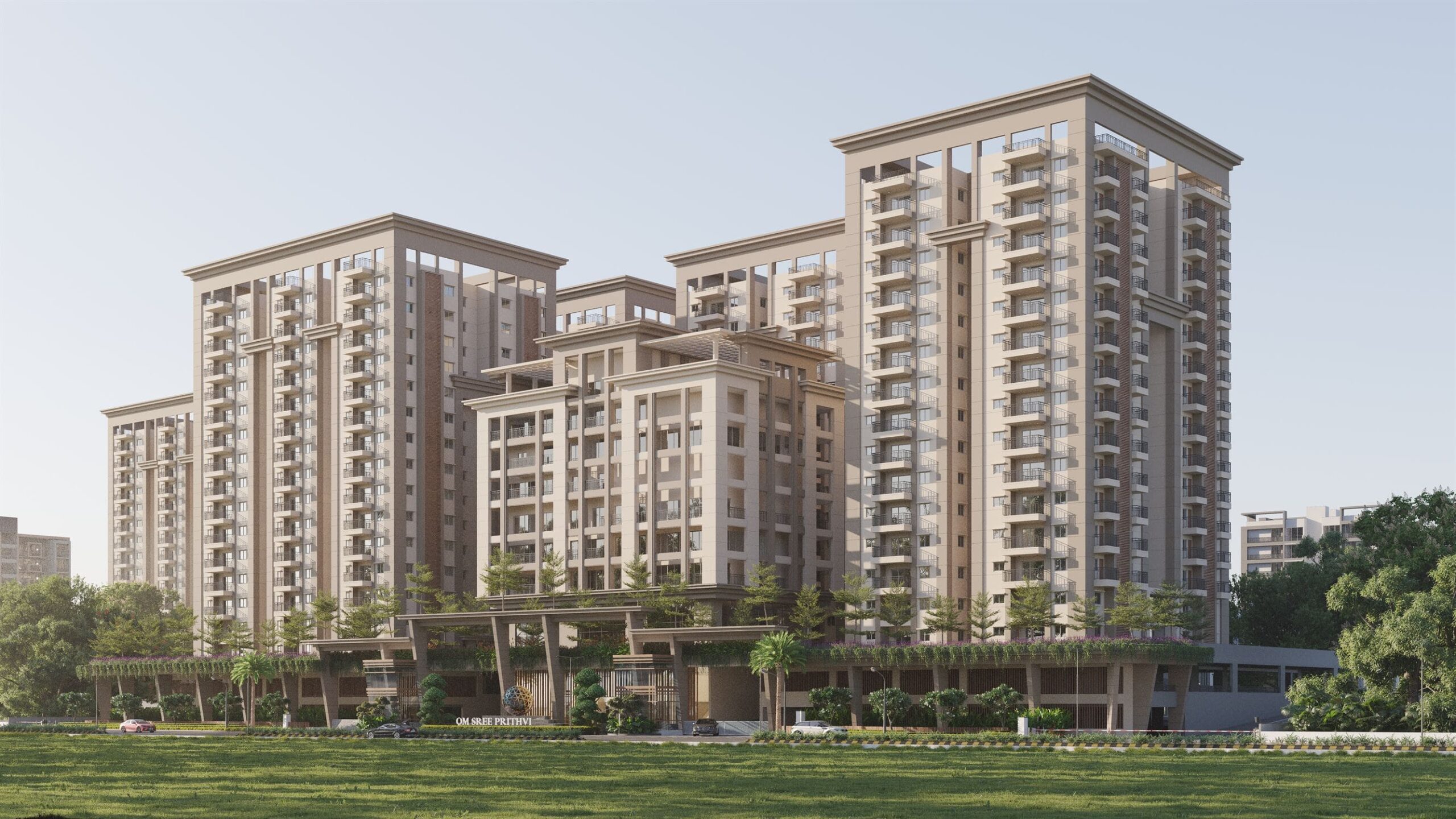
Buying a flat in Secunderabad is the biggest financial decision most families will make. For the vast majority of buyers, this means taking a home loan that will define their monthly budget for the next 15-20 years. Getting the loan right - choosing the right bank, the right tenure, the right repayment structure - is just as important as choosing the right flat. This guide walks you through everything a Secunderabad flat buyer needs to know about home loans in 2026, with specific EMI calculations for the price ranges most common in the market.
Current Home Loan Interest Rates (February 2026)
Home loan interest rates in India are linked to the repo rate set by the Reserve Bank of India, which currently stands in the range that translates to effective home loan rates of approximately 8.25-9.50% depending on the lender and borrower profile. Here is a snapshot of the major banks offering home loans in the Secunderabad market:
| Bank | Rate Range | Processing Fee | Max Tenure | Pre-Approved at Prithvi |
|---|---|---|---|---|
| SBI | 8.25-9.15% | 0.35% (min 2K-10K) | 30 years | Yes |
| HDFC Ltd | 8.50-9.40% | 0.50% (up to 3K) | 30 years | Yes |
| LIC HFL | 8.35-9.25% | 0.25-0.50% | 30 years | Yes |
| ICICI Bank | 8.60-9.45% | 0.50% (up to 5K) | 30 years | No |
| Bank of Baroda | 8.30-9.20% | Nil to 0.25% | 30 years | No |
| Canara Bank | 8.35-9.30% | 0.50% | 30 years | No |
A critical detail for Secunderabad buyers: banks that have pre-approved a project process loans significantly faster because the technical and legal due diligence on the property is already completed. For a project like Om Sree Prithvi in Yapral, where SBI, HDFC, and LIC HFL have existing approvals, loan processing can be completed in 2-3 weeks versus 4-6 weeks for projects without pre-approval.
EMI Calculations for Secunderabad Price Points
The most useful information for any buyer is a concrete EMI number. Here are calculations for the most common flat price points in Secunderabad, assuming 80% loan-to-value ratio (LTV), 8.5% interest rate, and 20-year tenure:
| Flat Price | Down Payment | Loan Amount | EMI (20 yr) | EMI (25 yr) | Total Interest (20 yr) |
|---|---|---|---|---|---|
| Rs. 95 Lakhs | Rs. 19 Lakhs | Rs. 76 Lakhs | Rs. 65,948 | Rs. 60,632 | Rs. 82.27 Lakhs |
| Rs. 1.03 Crore | Rs. 20.6 Lakhs | Rs. 82.4 Lakhs | Rs. 71,500 | Rs. 65,738 | Rs. 89.20 Lakhs |
| Rs. 1.18 Crore | Rs. 23.6 Lakhs | Rs. 94.4 Lakhs | Rs. 81,912 | Rs. 75,307 | Rs. 1.02 Crore |
| Rs. 1.33 Crore | Rs. 26.6 Lakhs | Rs. 1.064 Cr | Rs. 92,324 | Rs. 84,884 | Rs. 1.16 Crore |
| Rs. 1.50 Crore | Rs. 30 Lakhs | Rs. 1.20 Cr | Rs. 1,04,131 | Rs. 95,747 | Rs. 1.30 Crore |
Two observations from this table that every buyer should note. First, extending the tenure from 20 to 25 years reduces the monthly EMI by approximately 8-10%, but increases the total interest paid by 25-30%. The lower EMI improves monthly cash flow, but the cumulative cost is substantially higher. Second, the total interest paid over 20 years is roughly equal to the original loan amount. This means you effectively pay for the flat twice over the loan tenure. Any strategy that reduces the interest burden - whether through prepayments, shorter tenure, or negotiating a lower rate - has significant financial impact.
How Much Loan Can You Get? Eligibility Factors
Banks determine your loan eligibility based on several factors, the most important being your monthly income and existing obligations. The general rule is that your total EMI burden (including the new home loan plus any existing car loans, personal loans, or credit card dues) should not exceed 50-60% of your net monthly income. Here is a quick eligibility guide:
- Monthly income Rs. 80,000: Maximum loan approximately Rs. 55-60 Lakhs (at 8.5%, 20 years). Suitable for 2 BHK in the Rs. 70-75 Lakh range.
- Monthly income Rs. 1,00,000: Maximum loan approximately Rs. 70-75 Lakhs. Suitable for 2 BHK starting at Rs. 95 Lakhs with Rs. 20-25 Lakh down payment.
- Monthly income Rs. 1,30,000: Maximum loan approximately Rs. 90-95 Lakhs. Suitable for 3 BHK starting at Rs. 1.18 Crore with Rs. 23-28 Lakh down payment.
- Monthly income Rs. 1,70,000: Maximum loan approximately Rs. 1.15-1.20 Crore. Suitable for 3 BHK Premium at Rs. 1.33-1.50 Crore.
Joint applications (husband-wife, parent-child) can significantly increase loan eligibility by combining both incomes. This is particularly useful for families where both partners are earning. A couple with combined income of Rs. 1,50,000 can qualify for loans that a single earner at Rs. 80,000 cannot. Most banks actively encourage joint applications for larger loan amounts.
Documentation Checklist for Home Loan Application
Having your documentation ready before approaching the bank saves significant processing time. Here is the complete checklist for salaried and self-employed applicants:
For Salaried Applicants
Identity and address proof: Aadhaar card, PAN card, passport, voter ID, or driving license.
Income proof: Salary slips for last 3-6 months, Form 16 for last 2 years, bank statements for last 6-12 months showing salary credits.
Employment proof: Appointment letter, current employment ID, experience certificate if recently changed jobs.
Property documents: Sale agreement (draft or executed), allotment letter, builder RERA certificate, approved building plan, OC or CC as applicable.
Photographs: Passport-size photographs (typically 4-6 copies).
For Self-Employed Applicants
Everything above plus: ITR for last 3 years, computation of income, balance sheet and profit-and-loss statement (audited) for last 3 years, GST registration certificate, business proof (MOA/AOA for companies, partnership deed, shop establishment license).
Strategies to Reduce Your Home Loan Burden
Prepayment: The Most Powerful Tool
Under RBI guidelines, floating-rate home loans have zero prepayment penalty. Every lump sum you pay toward the principal directly reduces both the outstanding balance and the total interest payable. A prepayment of Rs. 5 Lakhs in the third year of a Rs. 76 Lakh loan can reduce total interest by Rs. 8-10 Lakhs and shorten the loan tenure by 2-3 years. Make it a practice to direct annual bonuses, increments, and windfalls toward home loan prepayment.
Choose Shorter Tenure If You Can Afford the EMI
A Rs. 76 Lakh loan at 8.5% costs Rs. 65,948/month over 20 years (total interest: Rs. 82.27 Lakhs) versus Rs. 77,480/month over 15 years (total interest: Rs. 63.46 Lakhs). The higher EMI of Rs. 11,532/month saves Rs. 18.81 Lakhs in total interest. If your budget can absorb the higher EMI, a shorter tenure is always financially superior.
Negotiate the Interest Rate
Home loan rates are not fixed by the bank. They are negotiable, especially for strong borrower profiles (CIBIL score above 750, stable employment, low existing obligations). A 0.25% reduction on a Rs. 1 Crore loan over 20 years saves approximately Rs. 3.5 Lakhs in total interest. Always negotiate, and use competing bank offers as leverage.
OC Awaited Advantage: Faster Processing, Better Terms
Banks process loans faster for OC awaited properties because the technical and legal evaluation is simpler. The property already exists, the OC confirms regulatory compliance, and the bank's risk is lower. This can translate to marginally better interest rates and faster disbursement. For a project like Om Sree Prithvi with existing SBI, HDFC, and LIC HFL approvals, the entire process from application to disbursement can be completed in 2-3 weeks.
Tax Benefits on Home Loans
Home loan borrowers in India enjoy significant tax benefits under the Income Tax Act. Under Section 80C, principal repayment up to Rs. 1.5 Lakhs per financial year is deductible from taxable income. Under Section 24(b), interest payment up to Rs. 2 Lakhs per financial year is deductible for a self-occupied property. For a flat purchased jointly, both co-owners can claim these deductions independently, effectively doubling the tax benefit.
Common Mistakes to Avoid
- Not checking CIBIL score before applying: A score below 700 significantly reduces your chances of getting the best rate. Check your score (free on CIBIL website) and fix any errors or outstanding issues before applying.
- Ignoring processing fees and hidden charges: Compare the total cost of the loan including processing fee, legal charges, valuation fee, and insurance premiums. A bank with a 0.1% lower interest rate but higher processing fee may end up costing more.
- Maxing out loan eligibility: Just because a bank will lend you Rs. 1.20 Crore does not mean you should borrow Rs. 1.20 Crore. Keep your EMI-to-income ratio at 40-45% maximum to maintain financial flexibility for emergencies, children's education, and retirement savings.
- Not reading the fine print on variable rates: Floating rate loans can increase your EMI when the repo rate rises. Understand the worst-case scenario: if rates increase by 1-2%, can you still afford the EMI?
- Skipping pre-approval: Get a pre-approved loan before house hunting. This gives you negotiating power with the builder and clarity on your budget.
Frequently Asked Questions
Q: What is the minimum salary required for a home loan in Secunderabad?
A: There is no fixed minimum salary, but practically, you need a net monthly income of at least Rs. 50,000-60,000 to qualify for a meaningful home loan amount (Rs. 30-40 Lakhs). For flats in the Rs. 95 Lakhs to Rs. 1.50 Crore range, a household income of Rs. 1,00,000-1,70,000 per month is typically needed.
Q: Can I get 100% financing for a flat?
A: No. RBI regulations limit home loan LTV to 75-90% depending on the loan amount. For loans above Rs. 75 Lakhs, maximum LTV is typically 75-80%. This means you need 20-25% of the flat value as down payment from your own funds.
Q: Which bank is best for home loans in Secunderabad?
A: SBI typically offers the most competitive rates for government and PSU employees. HDFC and LIC HFL are strong for salaried private sector employees. For self-employed borrowers, LIC HFL and ICICI tend to be more flexible. For OC awaited projects like Om Sree Prithvi, SBI, HDFC, and LIC HFL all have pre-approvals in place, making them the fastest options.
Q: How long does home loan processing take?
A: For OC awaited projects with existing bank approvals: 2-3 weeks. For under-construction projects: 4-6 weeks. For independent properties requiring fresh legal verification: 6-8 weeks. Having all documentation ready before applying significantly speeds up the process.
Q: Is home loan interest rate fixed or variable?
A: Most home loans in India are floating rate, linked to the bank's External Benchmark Lending Rate (EBLR) which follows the RBI repo rate. Fixed rate options exist but typically at a premium of 0.50-1.00% over the floating rate. Floating rate is recommended for most buyers as it benefits from rate cuts and allows prepayment without penalty.
Tags
OC Awaited - Direct Landlord Units Available Now
Skip the broker. Book a free site visit and negotiate directly with the owner.